This past spring, I was invited to a training facility in Florida for a two-day set of courses. The Faculty was called W.O.F.T., which W.O.F.T. stands for “Where Our Families Train,” after looking over their website, I attended one of their courses. Over the course of this three-part series I’ve shared my experience and thoughts on W.O.F.T’s approach. I recommend reading Part 1 and Part 2 before continuing with this article.
More Articles @ TFB
Class 4 – Handguns
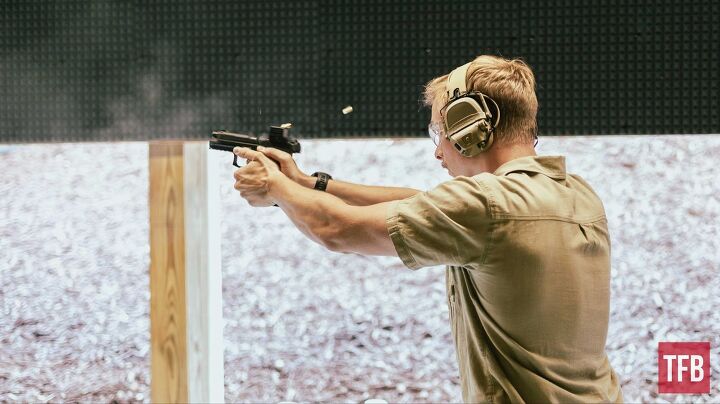
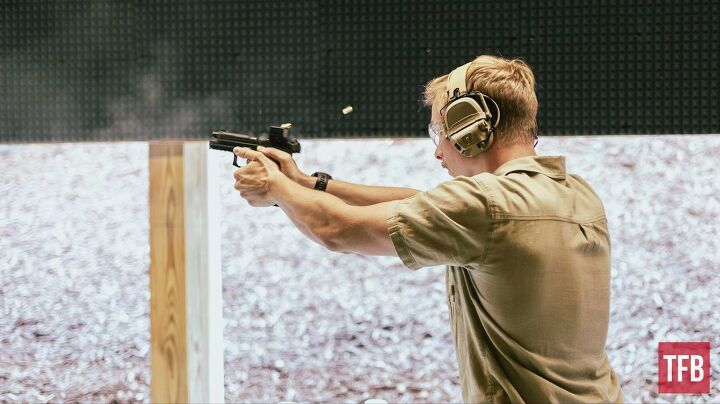
My time at WOFT culminated in a handgun class led by one of their pistol instructors, Buck. The group was small and diverse—just me, a handful of WOFT staff, and even one of the instructors’ kids tagging along for the experience. True to the facility’s ethos, Buck started by introducing himself and chatting with each of us individually. He probed our backgrounds, skill levels, and goals, tailoring the session on the fly to ensure it resonated with everyone.
This was my first dedicated pistol class, and I went in with low expectations. I don’t shoot handguns frequently and always figured I was mediocre at best. Our qualifying drill shattered that notion. We fired at a man-sized target from distances ranging from 3 meters out to 25 meters, focusing on shot placement and efficiency with a set number of rounds. To my astonishment, I ended up with the tightest grouping among the five of us. It was a humbling reminder that fundamentals can unlock potential you didn’t know you had.
Post-qualifier, Buck broke down the ergonomics of handgun handling in ways I’d never considered. He covered multiple grip variations, explaining how each might suit different hand sizes, body types, or shooting styles and how they influence recoil management and follow-up shots. It might sound basic, but framing grips as customizable tools rather than a one-size-fits-all approach was a game-changer. For someone like me, who was taught how to shoot by the Army almost 12 years ago, this was great information.
From there, we ramped up the pace. Buck coached us on accelerating draws and transitions while experimenting with those grip tweaks. The goal? Find what clicked for each person. We progressed to “mag dumps” unloading full magazines as quickly as possible while maintaining tight groups at 10 meters. Under his guidance, it felt surprisingly achievable. A few simple adjustments to stance, trigger discipline, turned frantic sprays into something a bit more controlled. By the session’s end, my shooting had actually come a long way and I was thinking more about why I was shooting and less about just pulling the trigger.
Why WOFT Stands Out to Me
Reflecting on my time at WOFT, what truly set the experience apart was the deliberate cultivation of a supportive community alongside rigorous skill development. From the outset, with a great breakfast and an orientation grounded in self-defense principles like the OODA Loop, Philip and his team emphasized not just tactical proficiency but lifelong scenario planning and neural-based training tailored to individual reactions. Classroom sessions on posturing drew fascinating parallels from nature. This philosophical foundation, combined with varying scenarios to prevent predictability.
I also wanted to mention that Philips’ home is on the property where all the training takes place. Philip was very open about this when he and I talked for a bit one evening. I was surprised to hear this because he was transmitting to every student where he lives. He then told me that he has a background check run on every student so that nobody crazy can come through the gates. This also means you can have some peace of mind that everyone you are training with or alongside has good intentions and is there to learn. Philip is certainly building a strong community here, encouraging repeat visits for continuation training to build on skills participants have already developed. I think that’s really cool—it’s not just a one-off event but an ongoing journey.
The hands-on sessions were a highlight, blending intensity with personalization that made even challenging drills exhilarating. Scenario-based training in low-light environments, such as carjacking simulations, unfolded and got my heart rate going. Observers benefited from room-wide microphones to catch every nuance, while participants cycled through 4-5 tailored reps that escalated in difficulty or subverted expectations—sometimes with no threat at all, teaching the perils of overreaction.
Ultimately, WOFT’s magic lies in its ripple effects beyond the mats and ranges, transforming not just individual capabilities but family dynamics and everyday confidence. Posturing and presence emerged as recurring themes, empowering proactive de-escalation over reaction. As our daily debriefs revealed a circle of takeaways, surprises, and improvement pledges, Philip’s post-session engagements reinforced the bonds. For anyone seeking self-defense that’s approachable, innovative, and community-driven, WOFT isn’t merely a course; it’s a catalyst for empowered living. I’m already eager to be back and conduct more training in the future to help myself learn and grow. Hopefully, I can convince my girlfriend to join me next time.